Posts

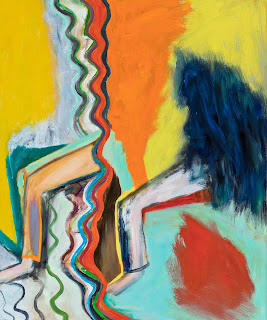
David Palliser, 'Endless Conditions' (Opening Speech)
Image
  There is a scientific term – Hypnagogia – which refers to the transitional state between wakefulness and sleep. It is the time that our body is asleep, but our mind is still partially conscious. It is a state that I particularly enjoy. Amongst the more common sensory features of hypnagogia are: random speckles; lines or geometric patterns; or sometimes figurative images. They may be monochrome or richly patterned; flat or three-dimensional. Images are typically fleeting and subject to rapid change. Just when you think you have registered something it is already turning into something else. Elements are permanently in flux. They are pure – in that they have no explanatory meaning outside of themselves. They simply exist by randomly ‘coming into being’. I always think of the hypnagogic state when I view David Palliser’s paintings. To me, they seem to operate in a similar way. Forms emerge and subside; objects are obliquely suggested, even as they meld into something else. Of co...
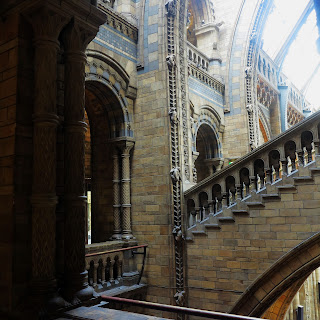
Horrible Little Histories (2013)

Image
         London's Natural History Museum seems to be predominantly set up for the entertainment of children and, accordingly, it is chock-full of dinosaur skeletons. For the intrigued adult visitor, however, there are also interesting pockets. Everywhere, one is confronted by the unheimlich other-worldliness of taxidermied animals, which are at once part of the world, yet also now forever apart from it.      On entering the main entrance hall one is struck by the wonderfully demented, Neo-Gothic Victorian architecture, which is somehow reminiscent of the interior of a great cathedral, with its stained glass windows and great vaulted arches.      When originally built, this architecture was obviously intended to elevate Science to religious status. Which is ironic, because so much of the collection deals with Evolution.      Walking up the wide stairs to one of the upstairs galleries devoted to the evi...

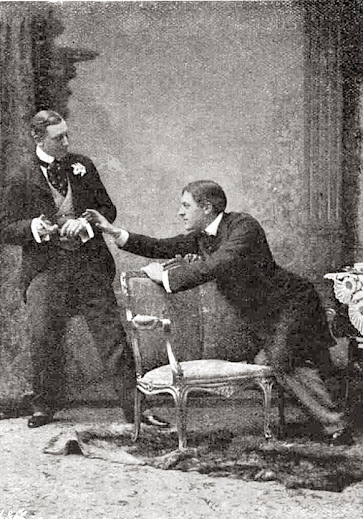
Victorian Shadows: Negotiating Homosexuality in the Late-1800s.

Image
  Gay artists and writers of the mid-to-late nineteenth-century could not identify themselves as homosexual as the term did not come into common usage until after the turn of the century. Indeed, the very notion that someone was predetermined to same sex attraction was completely outside of contemporary thought. Rather, it was believed that men could occasionally have spiritual or moral lapses. The word ‘homo-sexuality’ entered the OED only in 1892 …That the terms ‘heterosexual’ and ‘heterosexuality’ were coined even later (1900) suggests that what is at stake in this particular naming process is a distinctly modern epistemology not only of ‘deviance’ but of ‘normalcy’. [1] Gay men would have had only a nagging notion of their difference, and a strong sense that this difference was wrong. It was a time when gay men by necessity lived deep within the shadows, but the shadows were vague and what they obscured was unnamed and unidentifiable. Before the clinical name ‘homosexual’...